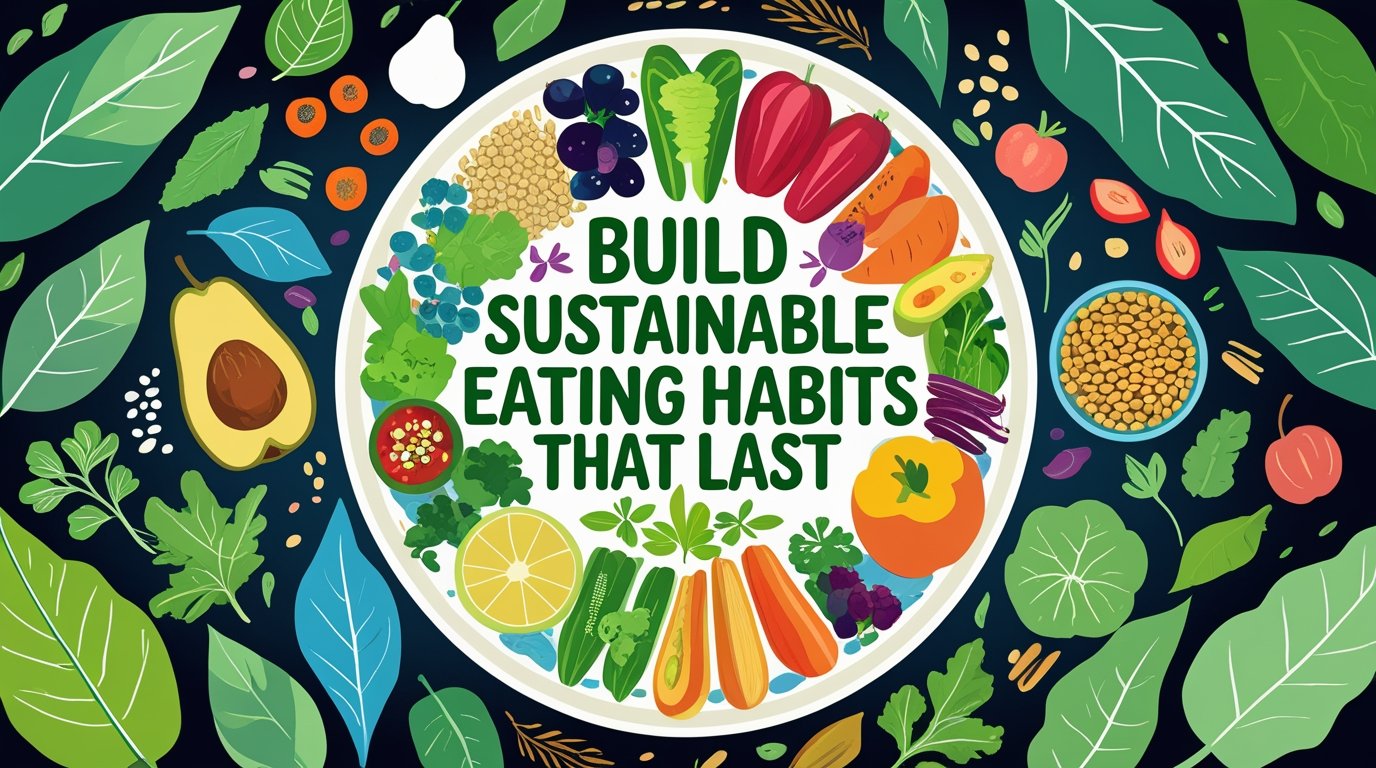
I have a confession. I’ve started more diets on a Monday than I can count. I’ve sworn off carbs, existed on little more than cabbage soup, and meticulously weighed chicken breast. And you know what every single one of those diets had in common? They ended. Usually, with me face-deep in a loaf of bread, feeling like a complete failure.
The problem wasn’t my willpower. The problem was the plan. It was designed to be temporary. It was a sprint, and life is a marathon. We’ve been sold a lie that eating well is about restriction, suffering, and following a complicated set of external rules. The truth is, sustainable eating has nothing to do with willpower and everything to do with building a new, quiet relationship with food. One that doesn’t leave you exhausted from the mental gymnastics of counting every calorie. This is about making peace with your plate.
Ditch the “Good” vs. “Bad” Food Mentality:
This is the first and most important step. As long as you see a chocolate chip cookie as a “sin” and a kale salad as a “virtue,” you’re setting yourself up for a cycle of guilt and rebellion.
Food is not moral. It is not good or bad. It is just food.
Some food is very nutrient-dense. It gives your body long-lasting energy and makes you feel strong. Think vegetables, lean proteins, and whole grains.
Some food is very pleasure-dense. It tastes amazing and brings joy. Think cake, pizza, and ice cream.
A sustainable diet includes both. It’s about balance, not perfection. When you take the morality out of it, you take away the power of the “forbidden fruit.” You can have a cookie, enjoy it without guilt, and then move on with your life. It stops being a dramatic event.
The One-Change-at-a-Time Rule:
You look at your current habits and you see a dozen things you want to fix. You want to eat more vegetables, drink more water, cut back on sugar, stop late-night snacking… so you try to do it all at once. This is a guaranteed way to overwhelm your brain and quit in a week. Your brain craves routine. It hates massive, sudden overhauls. So pick one thing. Just one. And do it for a month.
Not “eat more vegetables.” That’s too vague.
Make it stupidly specific. “I will add one handful of spinach to my lunch every day.” Or, “I will swap my afternoon soda for a sparkling water.”
That’s it. Don’t change anything else. Focus all your energy on nailing that one, tiny habit. After a month, it will feel automatic. It will just be something you do. Then, and only then, do you even think about adding a second small change. This is how you build a new lifestyle, one brick at a time. It’s slow. It’s boring. And it works.
Make Water the Easiest Choice:
We all know we should drink more water. But we don’t. Why? Because it’s often not the most convenient choice. Dehydration masquerades as hunger, fatigue, and headaches. Before you reach for a snack or another coffee, try drinking a full glass of water and waiting ten minutes. You might be surprised.
The hack isn’t to “remember” to drink water. It’s to make it impossible to forget.
- Get a large, good-looking water bottle and keep it on your desk. Seeing it is a visual cue.
- Add something for flavor if you hate plain water. A squeeze of lemon, a few cucumber slices, and some frozen berries.
- Drink a glass of water before every single meal. It’s a simple trigger that becomes automatic.
Cook One More Meal at Home Than You Do Now:
I’m not saying you have to cook every single meal. That’s not realistic for most people. But the single biggest shift in my own eating habits came from this one rule.
When you cook at home, you are in control. You control the ingredients, the portion sizes, and the salt and sugar content. A meal you make yourself is almost always going to be more nutritious than a takeout meal from a restaurant designed for maximum addictiveness.
This doesn’t have to be complicated. “Cooking” can be scrambling some eggs. It can be throwing a pre-marinated piece of chicken and some broccoli on a sheet pan to roast. It can be assembling a bowl with canned beans, pre-cooked rice from a pouch, and some salsa.
The goal isn’t to become a gourmet chef. The goal is to build the habit of feeding yourself. It’s a fundamental act of self-care.
Listen to Your Body:
We are born knowing how to eat. Babies cry when they’re hungry and turn their head away when they’re full. We unlearn this. We start eating because it’s noon, or because we’re bored, or because there’s free food in the breakroom. Relearning this is the final piece of the puzzle. It’s called intuitive eating.
Before you eat, ask yourself: “Am I actually, physically hungry?” Place your hand on your stomach. What do you feel?
While you’re eating, slow down. Check in halfway through the meal. Do you still feel hungry? Or are you getting pleasantly full?
Stop eating when you’re satisfied, not when you’re stuffed.
This feels weird at first. You’ll get it wrong. But over time, you start to trust the signals your body is sending you. You eat the cake when you truly want it, and you stop when you’ve had enough, because you know you can have it again tomorrow. That is true food freedom.
Wrapping Up:
Sustainable eating isn’t a finish line you cross. It’s a slow, meandering path. Some days you’ll eat exactly how you envision. Other days, you’ll survive on airport food and stress. That’s okay. The goal is progress, not perfection. Be kind to yourself. Ditch the rules. Start with one tiny change. And remember, food is meant to be both fuel and joy. Don’t let anyone convince you to sacrifice one for the other.
FAQs:
1. How do I deal with cravings?
Eat what you’re craving, mindfully and without guilt; denying it often makes the craving stronger.
2. What if I don’t have time to meal prep?
Focus on “assembly” meals using pre-cooked ingredients, rather than cooking everything from scratch.
3. Is it okay to still eat out?
Of course, sustainability means your habits work in the real world, including restaurants and social events.
4. How do I handle setbacks?
View them as data, not failure; ask what triggered the setback and how you can adjust, then just get back on track.
5. Do I need to cut out any specific foods?
Only if prescribed by a doctor for a medical condition; for most people, no food needs to be permanently off-limits.
6. What’s the one habit to start with?
Start by adding one vegetable to one meal each day; it’s simpler than trying to subtract “bad” foods first.
Leave a Reply